
Titan was the top gainer in the Sensex pack, rising over 3 per cent, followed by M&M, Reliance Industries, Axis Bank, TCS, Maruti and Infosys. NSE Nifty surged 122.10 points to 15,885.15.

Ajit Mishra, vice president, research, Religare Broking, answers your queries.

Ajit Mishra, vice president, Research, Religare Broking, answers your queries.
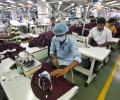
'A change we have seen after the Russia-Ukraine war is the energy crisis in Europe.' 'Earlier, in Europe, people used to change their clothes after 5 washes, now they are using it till 15-20 washes.' 'They used to change their entire wardrobe after 2 months or so, but because of the economic conditions, it has changed.' 'It has affected exports as 40% of our exports is to Europe, 30% to the US and 10% to the UK.' 'The war has to end for better days to come.'
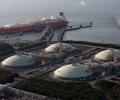
Around 15 years ago, when Reliance Industries (RIL) struck natural gas in the Krishna-Godavari (KG) basin off the east coast, the government made plans to supply that fuel cheaply to scores of generators that sprang up in India triggered by the discovery. Most of the plants, which account for 6 per cent of India's total generation capacity, operate sparsely after the KG-D6 area first failed to meet production targets, and then finally shut shop. Affordable domestic gas was why those thermal plants came up and the rate of the fuel today is why those generators hardly operate. Record liquefied natural gas (LNG) rates may yet again unravel India's ambitions to expand use of gas in industries, households and vehicles. Rates, while volatile, may stay strong this decade as developed nations with higher purchasing power embrace gas as the transition fuel.

In a move that may boost the Indian hydrocarbon industry and bring more investments into the sector, the Union Cabinet on Wednesday decided to give marketing freedom to domestic crude oil producers, allowing them to sell petroleum to any company in the local market. The move is set to be beneficial for major crude oil producers, such as state-run Oil and Natural Gas Corporation (ONGC) and Oil India, and private sector majors like Vedanta's Cairn Oil and Gas and Reliance Industries. As of May 31, India was dependent on imports for 86 per cent of its crude oil consumption; domestic production sufficed the remaining 14 per cent demand.

Ajit Mishra, vice president, Research, Religare Broking, answers your queries.

Sliding for the fourth straight day, the BSE Sensex shed 152 points in choppy trade on Wednesday amid mixed global cues ahead of the US Federal Reserve's policy decision.
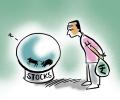
Banking and financial stocks got more than their fair share of foreign portfolio investor (FPI) flows in February. Overseas investors pumped in $3.56 billion into domestic equities last month. Of this $1.96 billion went into financial stocks, data analysed by Edelweiss shows. "The sector now has 34.8 per cent of FPI assets, up from 33.8 per cent in January.

After a stellar run that saw the frontline indices - the S&P BSE Sensex and the Nifty 50 - clock gains of around 21 per cent and 24 per cent respectively in calendar year 2021 (CY21), the year gone by in real sense belonged to the mid-and small-cap segments. Thus far in CY21, the mid-and small-cap indexes on the BSE have far outpaced the run in the frontline indices and notched up a gain of around 38 per cent and 61 per cent, respectively during this period. Though analysts expect the outperformance to continue in 2022, they caution against the multiple headwinds in the year ahead that may dent the overall market sentiment.
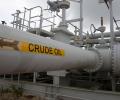
The basket of crude oil that India buys has hit a decade high of $121 per barrel, but retail selling prices of petrol and diesel continue to remain frozen. The Indian basket on June 9 touched $121.28, matching levels seen in February/March 2012, according to data available from the oil ministry's Petroleum Planning and Analysis Cell (PPAC). As per the PPAC, the Indian basket of crude oil averaged $111.86 per barrel between February 25 and March 29 - the immediate period after Russia's invasion of Ukraine sent oil on fire.

News, as a business, faces its biggest crisis ever, globally. To fight it needs investment in feet-on-the-ground journalism, tech tools like artificial intelligence among other things.

Equity indices failed to hold on to their gains in see-saw trade on Tuesday, ending in the red for the third straight session despite a tentative recovery in global equities. The rupee too bounced back from historic lows, but the overall sentiment remained risk-averse amid concerns over economic recovery in a high interest rate scenario. The 30-share BSE Sensex had a choppy start but gained momentum in mid-session trade. However, it succumbed to selling pressure towards the fag end to close 105.82 points or 0.19 per cent lower at 54,364.85. On similar lines, the broader NSE Nifty declined 61.80 points or 0.38 per cent to finish at 16,240.05.
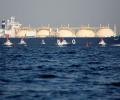
The government should bring natural gas under the Goods and Services Tax (GST) regime to realise Prime Minister Narendra Modi's vision for a gas-based economy and raising the share of the environment-friendly fuel in India's energy basket, an industry body that represents the likes of Reliance Industries as well as state-owned firms, has said. Natural gas is currently outside the ambit of GST, and existing legacy taxes -- central excise duty, state VAT, central sales tax -- continue to be applicable on the fuel. In its pre-Budget memorandum to the finance ministry, Federation of Indian Petroleum Industry (FIPI), which boasts of members from across the oil and gas spectrum, also demanded rationalisation of GST on transportation of natural gas through pipeline as well as on re-gasification of imported LNG to help bring down cost of the environment friendly fuel.

Bajaj Auto was the top laggard in the Sensex pack, tumbling around 6 per cent, followed by M&M, Reliance Industries (RIL), Tata Steel, Tech Mahindra, SBI, Axis Bank and ICICI Bank. NSE Nifty tumbled 162.60 points or 1.36 per cent to 11,767.75.

Investors' wealth rose by Rs 2,22,763.25 crore in three days of market rally, with the benchmark Sensex closing at an all-time high on Thursday. At close of trade, the 30-share BSE index gained 254.80 points or 0.48 per cent to 53,158.85, its lifetime closing high. During the day, the benchmark also reached its all-time intra-day peak of 53,266.12 points. The benchmark has gained 786.16 points in three days.

Apple's newest phone iPhone 14 will be made in India as the global tech titan bets big on the manufacturing prowess of the world's second-biggest smartphone market after China.

General Pande said the northern border region has been peaceful and steps have been taken to maintain peace through established protocol and existing mechanism.

Among the Sensex stocks, HDFC emerged as the top gainer, rising by 2.06 per cent, followed by Axis Bank, Maruti, Reliance, Power Grid and Tata Steel.
Indian Oil Corporation (IOC), the nation's largest oil firm, has renewed a deal to buy up to 2 million tonnes of crude oil in 2022 from Russia's Rosneft, the Russian oil producer said. IOC had in February 2020 signed a deal with Rosneft Oil Company to import up to 2 million tonnes of oil via the port of Novorossiysk. In 2021, the deal envisaged supply of up to 1.7 million tonnes of crude oil but IOC bought just on parcel or shipload as the cost of transporting the oil made it uneconomical, when compared to alternatives. For 2022, the deal is for the supply of up to 2 million tonnes of oil from the Black Sea port of Novorossiysk.

Why does the world's fastest-growing major consumer of energy fail to attract investments in oil and gas? This is a question worth pondering after private sector conglomerate Reliance Industries Ltd (RIL) failed to close a $15-billion downstream asset deal with Saudi Arabia's national oil company, Aramco. It's understandable if multi-billion dollar investments in oil and gas projects or deals involving state companies that need to traverse a complex bureaucracy at state and federal levels and the corridors of ministries unravel. However, Mukesh Ambani-run RIL, India's most successful energy company, is not typically known to fumble on closing deals (Ambani closed deals worth around Rs 2 trillion early last year in telecom and retail with blue chip investors).
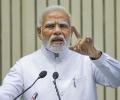
He said the country needs to have "zero tolerance" for corruption in the administrative ecosystem and this would work for the idea of a developed India.
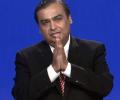
Fitch Ratings has upgraded Reliance Industries Ltd's (RIL) rating to 'BBB', one notch above India's sovereign rating, as the company benefits from cash flow generation across diversified business segments and continuation of deleveraging. In a statement, Fitch said it has upgraded RIL's long-term foreign-currency issuer default rating (IDR) to 'BBB', from 'BBB-', with a negative outlook. At the same time, the agency has affirmed RIL's long-term local-currency IDR at 'BBB+' with a stable outlook.

ONGC was the top loser in the Sensex pack, shedding around 5 per cent, followed by Sun Pharma, PowerGrid, Bajaj Finance, IndusInd Bank, Dr Reddy's and Maruti. On the other hand, Reliance Industries, Titan, HDFC Bank and ITC were the gainers.

Given India's reliance on coal, electric vehicles could at best be 10% more efficient than petrol in terms of CO2 savings.

Dr Reddy's was the top gainer in the Sensex pack, rising over 3 per cent, followed by PowerGrid, TCS, HCL Tech, Infosys and Reliance Industries. On the other hand, L&T, IndusInd Bank, Bajaj Finserv and Bharti Airtel were among the laggards.

Yes Bank has taken over the headquarters of Anil Ambani's group in suburban Santacruz in Mumbai for failure to repay dues worth Rs 2,892 crore. The private sector lender has also taken possession of two flats in South Mumbai for the non-payment of dues by Reliance Infrastructure, according to a notice published by Yes Bank in a newspaper on Wednesday.

Market benchmarks gave up intra-day gains to close in the red for the sixth session on the trot on Friday, capping a bruising week which saw a massive dash for safety amid rate hikes by global central banks and fears of slowing growth.

TCS was the top gainer in the Sensex pack, rising over 3 per cent, followed by L&T, Bharti AIrtel, HCL Tech, Tata Steel, Bajaj Auto and Reliance Industries. NSE Nifty rallied 164.70 points to its fresh closing peak of 16,529.10.

Kotak Bank was the top loser in the Sensex pack, shedding over 2 per cent, followed by ICICI Bank, PowerGrid, HDFC, IndusInd Bank and Axis Bank. NSE Nifty declined 45.75 points to 16,568.85.

Billionaire Mukesh Ambani on Wednesday pitched for using the USO Fund to subsidise smartphones for select groups to help penetrate the digital revolution and said India should make the rollout of 5G or the fifth-generation technology standard for broadband cellular networks a national priority. As much as 5 per cent of the licence fee paid by telecom operators goes to the Universal Service Obligation (USO) Fund, which was set up in April 2002 for achieving universal service objectives by providing access to telephone services in rural and remote areas and creation of infrastructure for mobile services and broadband in these areas. However, according to the CAG, less than half of the funds so collected are transferred for the said purpose.
Axis Bank was the top loser in the Sensex pack, shedding over 4 per cent, followed by Asian Paints, SBI, IndusInd Bank, ICICI Bank, Bajaj Finance, HDFC and Reliance. On the other hand, Bajaj Auto, Hindustan Unilever, UltraTech Cement, TCS, Bajaj Finserv and Infosys were the gainers.

The Tata group on Thursday launched its super app, Tata Neu, bringing all its brands in one platform as it seeks to play a major role in the Indian ecommerce space currently dominated by the likes of Amazon and Flipkart.

The Sensex rally was driven by Tata Motors, Vedanta, Bharti Airtel, Maruti, Reliance Industries, Tata Steel, Larsen and Toubro and HCL Tech.

India's top listed companies reported their best-ever quarterly net profit of Rs 2.39 trillion in the September quarter of FY22, up 46.4 per cent year-on-year. The earnings were driven by a big surge in the profitability of banks, non-banking financial companies & insurance (BFSI), oil & gas, and metal & mining firms. The combined net profit of these three cyclical sectors were up 87 per cent YoY to a record high of Rs 1.53 trillion, up from Rs 82,000 crore a year ago and Rs 1.08 trillion in Q1FY22.

Ajit Mishra, vice president, Research, Religare Broking, answers your stock market queries.

Axis Bank was the top gainer in the Sensex pack, climbing 3.33 per cent, followed by PowerGrid, SBI, Bharti Airtel, ICICI Bank, Reliance Industries and Maruti.

As oil marketing companies (OMCs) stare at huge under-recoveries, India is facing fuel shortage across the country with states like Rajasthan, Madhya Pradesh, Karnataka Uttarakhand, Gujarat and Haryana being the worst hit. The under-recoveries suffered by OMCs are around Rs 20-25 a litre for diesel and Rs 14-18 a litre for petrol, said sources. Government and state-run companies denied reports of any crisis or supply-side issues on the availability of fuel.

Ajit Mishra, vice president, Research, Religare Broking, answers your stock market queries.

Reliance Industries was the top gainer in the Sensex pack, surging over 3 per cent, followed by Bajaj Finserv, IndusInd Bank, HDFC twins and Kotak Bank. NSE Nifty surged 143.25 points or 1.18 per cent to 12,263.55.
 © 2026 Rediff.com - Advertise with us - Disclaimer - Privacy Policy - Sitemap - Feedback - About us - Terms of use - Grievances